
Robots That Learn From Humans Are Now Getting Faster Than Us
Robots have been getting a lot better at learning by watching humans. Instead of programming every tiny step, engineers can now show a robot how to do something once, and…
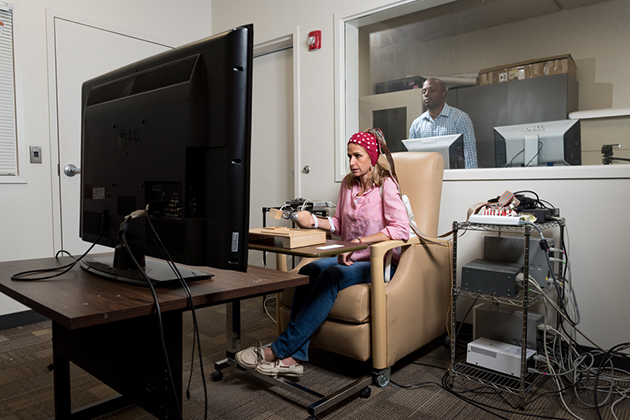
Neuroscience isn’t just about studying the brain in isolation anymore. At the Georgia Institute of Technology, a team of interdisciplinary researchers is tackling major health challenges by looking at how…
Researchers at Carnegie Mellon University (CMU) and Meta have developed a new humanoid robot control system called BFM-Zero, designed to help robots adapt smoothly to many different tasks without needing…
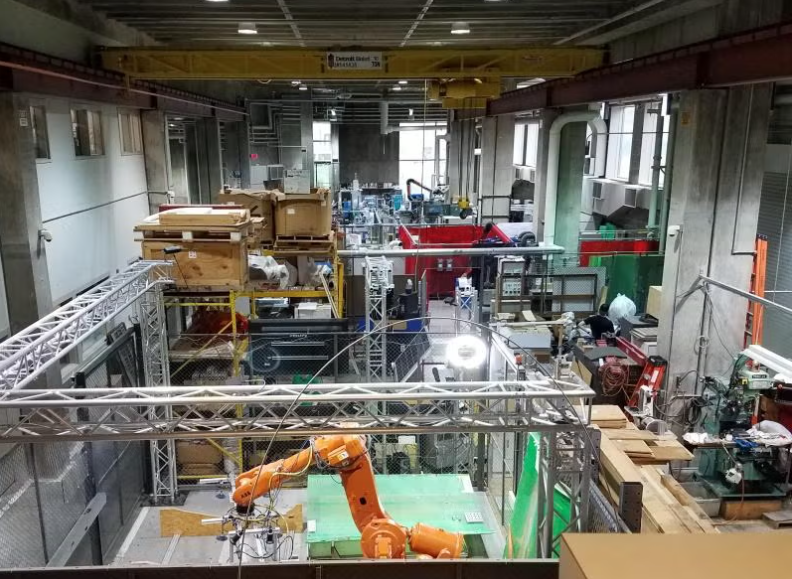
Johns Hopkins Applied Physics Laboratory (APL) has installed a high-capacity industrial robotic arm at its advanced manufacturing facility to push research in maritime repair and manufacturing. The move is aimed…
Researchers at Carnegie Mellon University’s Robotics Institute have built a caregiving robot that doesn’t just follow pre-programmed motions but actually talks with people and adjusts what it does based on…
MIT researchers have developed a small flying robot that could revolutionize plant pollination. Inspired by bees, this tiny bot can fly much longer and faster than earlier versions, offering a…
Fashion and engineering collide to rethink how humans and robots share space Robots stepped onto the runway at Humanoids’25, not as lab tools or industrial machines, but as performers. They…
Introduction Researchers at MIT have developed a new method that enables robots to quickly generate accurate, large-scale 3D maps of their surroundings. This advancement has important implications for search-and-rescue missions,…
Introduction Melanoma is the most serious form of skin cancer that affects about 212,000 people every year in the United States according to the American Academy of Dermatology. If melanoma…