
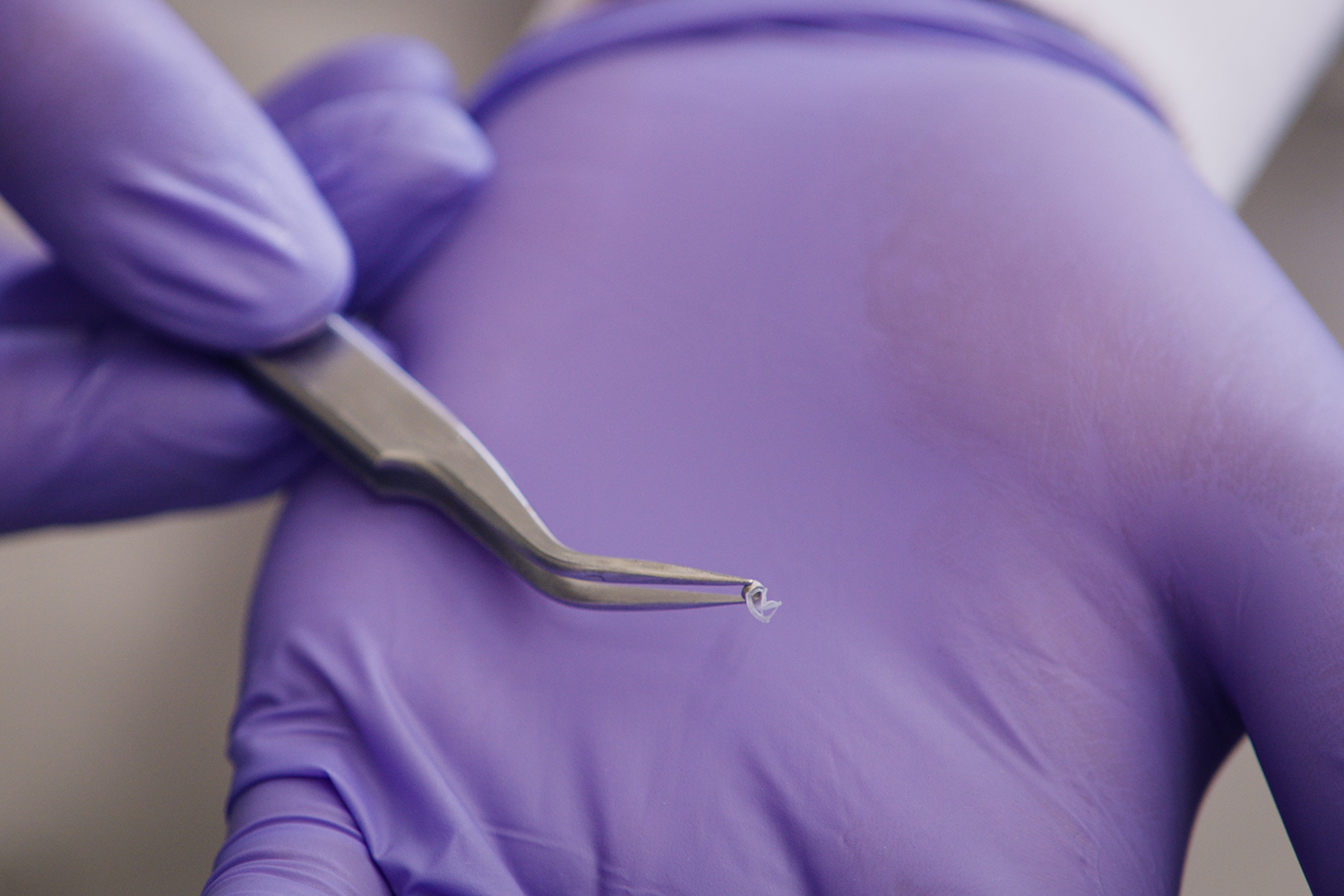
A Stanford team is building a micro-robot that can swim through blood vessels and shrink stroke clots. When a clot causes a stroke, every minute counts. The best treatment, called thrombectomy, is only offered at certain hospitals. In fact, about half of Americans live more than an hour from one. Now the project has won major federal funding to move closer to patients.
Who is working on the micro-robot?
Renee Zhao leads the project. She is an assistant professor of mechanical engineering at Stanford, and she built the first prototype. Her Stanford partners include Monroe Kennedy, Oussama Khatib, and Jeremy Heit, a radiology professor at Stanford Medicine. In addition, George Karniadakis of Brown University is on the team. Industry partners Philips, Medtronic, and Terumo Neuro are also involved.
What is the micro-robot project?
The robot is called M3bot, short for magnetic milli-spinner microbot. It is only millimeters long and has no wires. Doctors inject it into the bloodstream. Then they steer it with magnets outside the body and watch it on live X-ray video. The team received an award of up to $27.2 million over five years from ARPA-H. The goal is the first wireless, self-guided robotic treatment for stroke. We have covered other major robotics research grants before, but this one is aimed directly at patients.
How does the micro-robot work?
M3bot has a spiral shape. So when it spins, it moves forward like a boat propeller. The current version travels faster than 55 centimeters per second. That is fast enough to swim against blood flow. Its hollow center and side slits also create suction.
When it reaches a clot, the spinning squeezes the clot’s fiber mesh. This frees trapped red blood cells. As a result, the clot shrinks to about one-twentieth of its size without breaking into dangerous pieces. Doctors then remove the leftover material when they pull the robot out. The team has also shown it can deliver medicine into brain aneurysms. Next, they plan to add AI vision so the robot can steer itself.
Stanford’s Impact
If it succeeds, this micro-robot could let stroke patients get treatment at their nearest hospital. That would save precious time. More broadly, the team hopes to create smart robots that travel to disease sites and perform procedures that are impossible today. AI is already reshaping medicine, as Northeastern’s melanoma detection tool shows. Read the full announcement on Stanford News.