
Neuroscience isn’t just about studying the brain in isolation anymore. At the Georgia Institute of Technology, a team of interdisciplinary researchers is tackling major health challenges by looking at how the nervous system interacts with the rest of the body. Their work spans motor control, mobility, mental health, movement mechanics, perception, and behavior. It all ties back to the idea that understanding the nervous system means understanding how we live, move, think, and recover.
A New Collaborative Force
Georgia Tech recently formed the Institute for Neuroscience, Neurotechnology, and Society (INNS). This institute brings together faculty from biology, engineering, computing, physics, and behavior sciences to find solutions for complex neurological problems. Some of their research focuses on conditions like stroke, limb loss, Parkinson’s disease, Alzheimer’s disease, and treatment-resistant depression.
Helping People Move Again
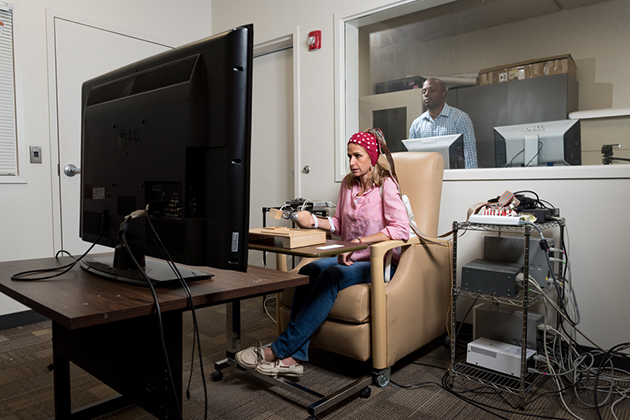
Stroke and limb loss can leave people with major motor control issues. At the Cognitive Motor Control Lab, researchers use brain imaging tools like fMRI and EEG to study how neural networks reorganize after injury. By understanding how these networks work, they aim to improve rehabilitation techniques and help people regain skills they’ve lost.
In another lab, engineers are building wearable robots and exoskeletons that help people relearn how to walk. These devices don’t just assist movement; they work with the nervous system to retrain it, helping users improve balance and gait over time.
Mapping and Treating Hard-to-Fix Brain Disorders
Some forms of depression don’t respond to medication or therapy. Georgia Tech researchers are using neural recordings to understand how brain circuits behave in these cases. They’re exploring advanced treatments, including how electrical stimulation can rewire misfiring neural circuits and ease symptoms.
Breaking Down Movement and Behavior
Grabbing a cup of coffee is a complex series of actions that involves many parts of the nervous system. Scientists at Georgia Tech are using machine learning and motion capture to analyze these basic movements in fine detail. By tracking joint and muscle activity in animal models, they can study how motor control goes wrong in diseases like Parkinson’s and Huntington’s.
Another group studies how animals make decisions based on sensory information. By recording brain activity in insects like hawk moths, researchers uncover how perception and movement are linked — insights that could eventually inform robotics, AI, and military technology.
Making Sense of Complex Data
Modern neuroscience generates enormous amounts of data. Computational neuroscientists at Georgia Tech are developing machine learning tools to interpret this data. These tools help turn messy video and neural signals into meaningful patterns, revealing how behavior and brain activity connect on a deeper level.
Why It Matters
What ties all this work together is a simple goal: improve human health by understanding the nervous system with precision. Whether it’s helping someone walk again after a stroke, treating stubborn depression, or decoding movement mechanics, this research could change how neurological conditions are understood and treated.
Vraj Parikh